

About McMillian Aerospace
Discover the vision and dedication that drives McMillian Aerospace. Learn about our journey, our groundbreaking technology, and the team committed to redefining aerial engineering.
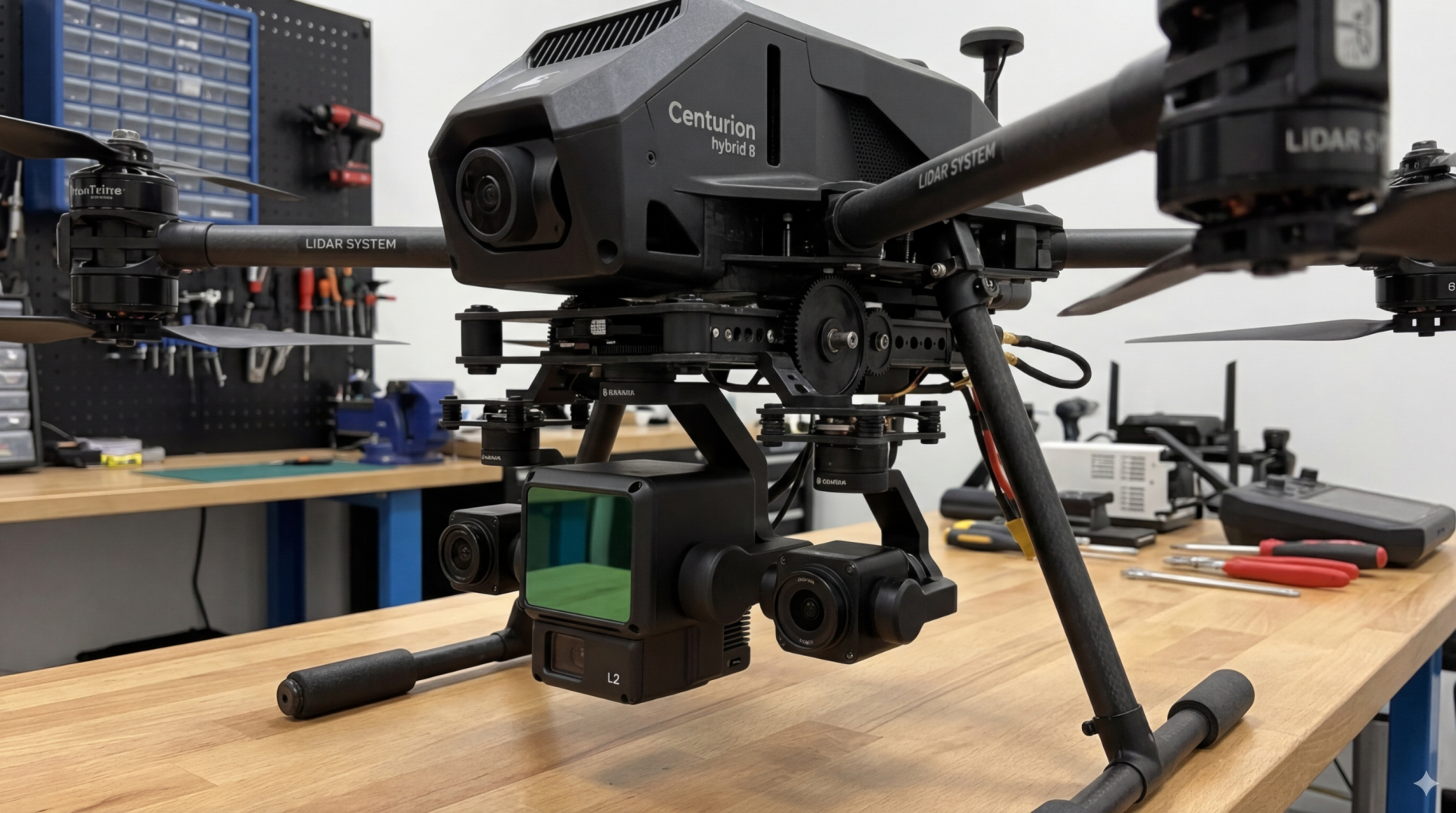
Our journey in advanced aerial engineering
To address the technical and strategic foundation of McMillian Aerospace, the following breakdown explores the core innovation, engineering principles, and the path toward commercial scalability.
Core Innovation: The Centurion Hybrid 8 & Tech Rail 4
The primary innovation lies in the integration of high-endurance heavy-lift propulsion with a modular rail-deployment system. Unlike standard consumer drones, McMillian Aerospace focuses on industrial-grade Unmanned Aerial Systems (UAS) designed for sustained operations in logistics and infrastructure monitoring.
1. Principles of the Technology
* Hybrid Power Distribution: Utilizing a hybrid electronic/combustion or high-density battery configuration to overcome the "energy density wall" that limits pure EV drones to 20–30 minutes of flight.
* The Tech Rail 4 System: A proprietary structural framework that allows for rapid payload swapping. This "plug-and-play" engineering ensures the same airframe can transition from cargo transport to high-definition multispectral imaging in minutes.
* Domestic Sovereignty: A strict "All-American" supply chain philosophy. By sourcing components exclusively from US-based manufacturers, the technology avoids the firmware vulnerabilities and geopolitical risks associated with international hardware.
2. Proven Concepts & Scaling
* What has been proven: Initial CAD modeling and technical specifications for the airframe stress points have been established. The feasibility of the weight-to-thrust ratios required for the Centurion series is grounded in existing aerospace physics.
* Commercial Scalability: We are currently in the Pre-Seed/Prototype phase. The transition to commercial scalability is approximately 12 to 18 months away, pending the completion of a full-scale flying prototype and FAA Part 107/Type Certification.
3. Risks & Theoretical Validation
* Remaining Risks: The primary "unproven" factor is the real-world efficiency of the integrated hybrid power management system under heavy load (max takeoff weight).
* Theoretical Models: Computational Fluid Dynamics (CFD) models have been utilized to predict drag coefficients and lift efficiency.
* Third-Party Validation: Validation is currently internal; however, the next milestone involves seeking ASTM International F38 committee standards alignment and engaging independent testing labs for structural integrity verification.
The "Three Major Things That Could Go Wrong"
In the spirit of "engineering the gene pool" of the company, we identify these critical failure points:
* Thermal Runaway/Power Failure: The complexity of a hybrid system introduces multiple points of failure. Managing the heat signature and power handover between energy sources is the highest technical hurdle.
* Regulatory Bottlenecks: FAA "Beyond Visual Line of Sight" (BVLOS) regulations are evolving. A delay in federal certification could stall the business model even if the technology is perfected.
* Supply Chain Latency: Restricting the build to "All-American" parts is a competitive advantage for government contracts but creates a risk of slower iteration cycles if domestic specialized components face backlogs.
Timeline to Viability
To fully validate the technology’s viability:
* Phase 1 (0–6 Months): Finalize sub-system bench testing and static motor thrust tests.
* Phase 2 (6–12 Months): Tethered flight trials and Alpha-prototype maneuvers to validate the flight controller's response to the Centurion’s unique mass distribution.
* Phase 3 (12+ Months): Autonomous mission testing and endurance stress-testing in varied atmospheric conditions.
By focusing on these specific engineering hurdles now, McMillian Aerospace is moving from a conceptual blueprint toward a rigorous, defensible industrial platform.

Core capabilities and pioneering solutions
Our core capabilities include the Flagship Centurion Hybrid 8, our gas-electric powerhouse engineered for up to 10 hours of continuous flight and over 50 lb payload capacity. We also excel in precision manufacturing, crafting high-durability, carbon-fiber components designed to withstand extreme environments, and advanced logistics, streamlining complex aerial deployments.

Innovation for defense and beyond
The Centurion Hybrid 8 provides a strategic advantage in contested and austere environments, offering tactical resupply and rapid delivery of medical supplies, ammunition, and critical parts to forward units. Our commitment to innovation is unwavering, constantly pushing the boundaries of what's possible in aerial technology.
"Our proprietary technology, like the Tac-Rail-4, truly sets McMillian Aerospace apart from the competition."
Marco McMillian, CEO of McMillian Aerospace
Our dedicated team
The success of McMillian Aerospace is built upon the hard work and dedication of our team. We are proud to be composed of working-class individuals and veterans, bringing a wealth of experience and a strong work ethic to every project.
Create Your Own Website With Webador